BREAST LIFT

Firm & Confidently Beautiful Body Line

Restore breasts to their youthful, firm, and lifted shape

Pregnancy, childbirth, and aging gradually cause the breasts to stretch and sag, with the nipples pointing downward. This is more common in individuals with larger breasts, but even those with smaller breasts may experience downward-facing nipples. Severe sagging not only leads to aesthetic concerns but can also cause discomfort, such as skin irritation beneath the breasts, leading to increased stress. The degree of breast sagging is typically assessed based on the position of the breast relative to the inframammary fold (breast crease).

Surgery duration

Appx. 2 hours

alarm_on

Anesthesia method

General anesthesia

vaccines

Suture removal

5 to 7 days

content_cut

Follow-up visits

2 to 3 times

home_health

Recovery period

5 to 7 days

volunteer_activism
After breast surgery, some individuals may experience side effects such as bleeding, infection, or inflammation.
The risks and recovery process may vary depending on the patient's condition and the surgical method used.
Self-Diagnosis for Sagging Breasts
The degree of breast sagging is determined by the position of the nipple relative to the inframammary fold (breast crease) and is generally classified into three stages.

Normal

The distance from the inframammary fold (breast crease) to the nipple is typically 4–5 cm.

Grade 1 Ptosis

The nipple is within 1 cm below the inframammary fold.

Grade 2 Ptosis

The nipple is 1–3 cm below the inframammary fold.

Grade 3 Ptosis

The nipple points downward and is positioned more than 3 cm below the inframammary fold.

Surgical Methods Based on the Degree of Sagging
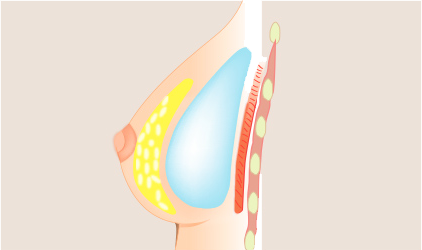
Correction for Small & Sagging Breasts (Grade 1–2 Ptosis)

Breast augmentation with implants is performed simultaneously to correct both sagging and enhance volume. If you desire breast enlargement but feel hesitant about implants, you can use your own fat to increase volume naturally.
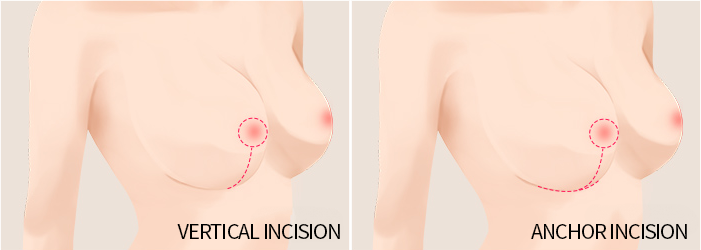
Correction for Small & Severely Sagging Breasts (Grade 3 or Higher Ptosis)

Breast augmentation with implants is performed alongside vertical incision (lollipop method) or anchor incision (inverted-T method) to lift the breast tissue and remove excess skin for a firmer, more youthful shape.
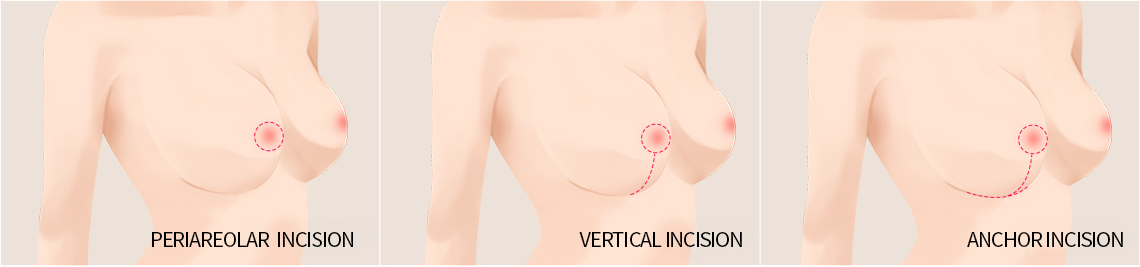
Correction for Sagging Without Changing Breast Size

If you wish to correct sagging without altering breast size, the appropriate surgical method is chosen based on the degree of sagging. Periareolar incision, vertical incision, or anchor incision techniques are used to lift the breast tissue and remove excess skin while maintaining the original breast volume.

Post-Surgery Precautions

Dietary Guidelines
You may start eating six hours after surgery, and it is recommended to consume soft foods such as porridge or rice gruel.
Sleeping Position
Avoid bending your head down or lying on your stomach; it is best to sleep with 2–3 soft pillows supporting your upper body.
Physical Activity
Light stretching is allowed after three weeks, but chest muscle exercises should be avoided.
Arm Movement
For the first seven days after surgery, do not raise your arms above 90 degrees or engage in activities that put strain on your arms.
Lifestyle Restrictions
Avoid alcohol, smoking, saunas, and hot baths for at least four weeks after surgery.
Showering
You may take a full-body shower approximately 2–4 days after surgery.