BREAST REDUCTION
Recreate Your Perfectly Fitted Breasts
A tailored body balance design that best suits your physique
Surgery duration
Appx. 2 hours
Anesthesia method
General anesthesia
Suture removal
5 to 7 days
Follow-up visits
2 to 3 times
Recovery period
5 to 7 days
The risks and recovery process may vary depending on the patient's condition and the surgical method used.
Self-Diagnosis for Macromastia
overall volume, body proportion, and daily discomfort, to determine the necessity of surgery.
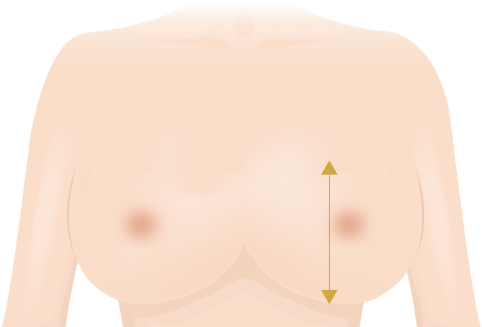
| Macromastia | |||||||
| SIZE | A Cup | B Cup | C Cup | D Cup | E Cup | F Cup | G Cup |
|---|---|---|---|---|---|---|---|
|
DISTANCE
(Upper to Lower Breast) |
10cm | 12.5cm | 15cm | 17.5cm | 20cm | 22.5cm | 25cm |
Breast Augmentation Procedure
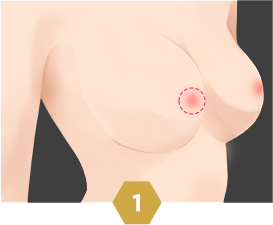
Areolar Incision Method
This technique is suitable for individuals whose breasts are not excessively large or severely sagging. It helps maintain the natural shape and function of the breasts while minimizing scarring compared to other surgical methods. The procedure is relatively simple, results in less bleeding, and allows for a faster recovery.
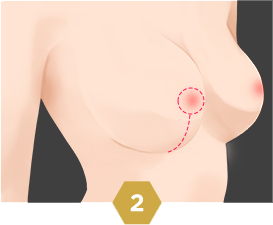
Vertical Incision Method
This technique improves upon the traditional "anchor-shaped" method and the areolar incision method, addressing their limitations. It can be applied regardless of breast size. Compared to the anchor incision method, it results in smaller scars, preserves nipple sensitivity, and allows for breastfeeding after surgery.
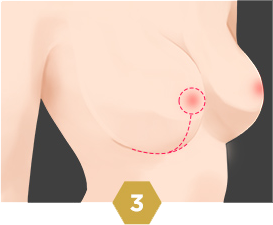
Anchor Incision Method
This is the most traditional technique, involving an incision from the areola down to the breast crease. It is best suited for cases where the breasts are excessively large, severely sagging, and require a significant reduction in volume.